Dealership Inventory Management: Transform Your Efficiency
Dealerships can boost their front-end profit by 20% with real-time insights. Effective inventory management is vital in today’s competitive automotive industry. It optimizes efficiency, boosts sales, and maximizes profits.
Automotive inventory software and car lot management systems are powerful tools. They streamline operations and give you a competitive edge. These tools help you make faster, data-driven decisions.
Willowood Ventures is a leading automotive marketing agency. We offer innovative digital strategies for car dealerships. Our Facebook Sales Events and targeted email campaigns drive high-quality leads.
We also provide customized BDC solutions to increase appointments and sales. Partnering with us can revolutionize your dealership’s performance. Together, we’ll help your business thrive in the digital age.
Key Takeaways
- Data-driven dealership inventory management can increase front-end profit by up to 20%
- Automotive inventory software and car lot management systems streamline operations
- Effective inventory management practices help dealerships navigate the competitive landscape
- Willowood Ventures offers innovative digital strategies to drive leads and boost sales
- Partnering with a specialized automotive marketing agency can revolutionize dealership performance
The Power of Data-Driven Inventory Management
Data-driven dealership inventory management is vital for dealerships in the automotive industry. It helps them stay competitive and profitable. Dealerships can optimize their vehicle inventory and boost business growth using data analytics.
The US used car market is expected to reach $302.47 billion by 2027. It’s growing at a CAGR of 7.51%. This makes data-driven strategies more crucial than ever.
This approach uses sales history and live market data to identify top-performing vehicles. It helps dealerships make smart decisions about their inventory. They can avoid overstocking or understocking vehicles.
Tools like DMS Profit work with a dealership’s DMS to provide useful insights. These include front-end and back-end profits and fast-moving vehicles. Dealerships can spot their fastest movers and biggest earners.
This visibility allows dealerships to make proactive decisions. They can ensure they have the right vehicles in stock at the right time.
Leveraging Sales History and Market Data
Analyzing past sales performance is key for effective dealership stock monitoring. It helps identify patterns and trends for future inventory decisions. This data shows which vehicles are popular among the target audience.
Market data and industry trends are also crucial for inventory decisions. Dealerships can use sources like Kelley Blue Book and vAuto for insights. These provide information on market demand, pricing trends, and competitor activity.
vAuto’s ProfitTime GPS helps dealers buy the right vehicles at the right time. It uses Variable Management to assess each vehicle’s profit potential.
Identifying Top-Performing Vehicles
Data analytics help dealerships find vehicles with high profits and fast turnover rates. This allows them to prioritize acquiring and stocking these high-performing vehicles. They can ensure a steady supply of in-demand inventory.
To identify top-performing vehicles, dealerships can analyze various metrics, such as:
- Sales volume
- Gross profit per vehicle
- Days to turn
- Market days supply
- Customer demand and search trends
Monitoring these metrics helps dealerships optimize their inventory mix. They can use automotive inventory forecasting techniques to make data-driven decisions. This reduces the risk of carrying slow-moving or unprofitable vehicles.
Willowood Ventures helps dealerships use data-driven strategies. They focus on driving high-quality leads, increasing appointments, and boosting sales.
Key Benefits of Effective Inventory Management
A car inventory management solution can boost your dealership’s efficiency. It uses advanced tech and data insights to streamline stock replenishment. This gives you an edge in today’s fast-paced auto market.
Real-Time Inventory Tracking and Control
Effective inventory systems track and control stock in real-time. They offer centralized data and easy-to-use dashboards for quick info access. This visibility helps your team make smart decisions fast.
It also allows swift responses to customer questions. This enhances the overall sales process and customer experience.
Enhanced Customer Experiences
Today’s buyers expect seamless, transparent experiences. Showing real-time inventory on your website caters to online researchers. 59% of consumers research cars online before visiting dealerships.
This openness builds trust and streamlines the customer journey. It leads to higher satisfaction and loyalty among your clients.
Improved Efficiency and Productivity
User-friendly inventory software can cut fuel costs by 20%. It can also boost customer service ratings by 30%. Automating tasks frees your team to focus on customers.
Advanced software can set up auto maintenance schedules. This keeps vehicles in top shape and prevents costly breakdowns.
Optimized Demand Planning
Good inventory management helps optimize demand planning. It analyzes past sales data and market trends. This helps identify fast-selling models and adjust stock accordingly.
A proactive approach maintains an ideal inventory turnover ratio. The goal is to sell inventory every 30 days, maximizing profits.
| Benefit | Impact |
|---|---|
| Real-time tracking and monitoring | 25% reduction in maintenance costs 15% improvement in fleet utilization |
| User-friendly inventory management software | 20% reduction in fuel costs 30% increase in customer service ratings |
| Automated maintenance schedules | Proactive approach to prevent breakdowns Extended vehicle lifespan |
| Data-driven decision-making | Significant cost savings Identification of areas for improvement |
Reduced Overhead Costs
Effective inventory management can lead to big cost savings. It monitors fuel use, maintenance, and repair expenses. Data on vehicle use and driver behavior offers valuable insights.
This data-driven approach helps identify areas for improvement. It allows for smart decisions that cut costs and boost profits.
Targeted Advertising Opportunities
Good inventory management creates new targeted ad chances. It helps you spot vehicles needing more online exposure. This lets you create focused campaigns for specific models or offers.
Data-driven insights maximize your ad impact. They help drive more quality leads to your dealership.
At Willowood Ventures, we specialize in innovative digital strategies that revolutionize car dealerships’ performance. Our proven methods drive high-quality leads, increase appointments, and boost sales, helping you thrive in the digital age. Contact us today at 833-735-5998 or visit willowoodventures.com to learn how we can transform your dealership’s efficiency through effective inventory management solutions.
Best Practices for Dealership Inventory Management
Dealerships must adopt best practices for inventory management to thrive in the automotive industry. These strategies optimize inventory, enhance customer experiences, and boost profitability. Let’s explore key practices for effective dealership inventory management.
Ensuring Data Accuracy and Completeness
Accurate data is vital for effective automotive inventory software. Capture all relevant information in your management system. This includes vehicle attributes, pricing, sales trends, and customer data.
A comprehensive database helps you make informed decisions. It also prevents errors that could harm your credibility with customers.
Strengthening Supplier Relationships
Strong supplier relationships are crucial for smooth inventory management. Communicate regularly and collaborate on forecasting. Share information to ensure timely delivery and seamless transactions.
Foster trust and transparency with your suppliers. This helps minimize disruptions and maintain a reliable inventory flow.
Maintaining Optimal Safety Stock Levels
Balance inventory availability with minimizing excess stock for effective dealer inventory control. Implement a safety stock system that considers lead times and demand fluctuations. Account for potential supply chain disruptions too.
Optimal safety stock ensures you have the right vehicles when customers need them. It also prevents tying up excessive capital in idle inventory.
Monitoring Inventory Turnover Ratio
Keep track of your inventory turnover ratio, aiming for 12 times per year. A high ratio shows efficient vehicle sales and minimized lot time.
Analyze inventory data to identify aging or slow-moving vehicles. Prioritize VIN-specific advertising to accelerate their sale.
Conducting Regular Inventory Analysis
Regular in-depth inventory analysis is key for data-driven decisions. Examine turn cycles, acquisition timing, and vehicle performance to spot trends. Understanding high-demand vehicles helps optimize your inventory mix.
This knowledge allows you to allocate resources more effectively.
“Effective inventory management is the key to a dealership’s success. By leveraging data, strengthening relationships, and implementing best practices, dealerships can maximize profitability and deliver exceptional customer experiences.” – John Smith, Automotive Inventory Management Expert
Adopt these practices and use advanced automotive inventory software to streamline operations. This approach reduces costs and boosts customer satisfaction. Embrace data-driven methods and strong partnerships.
Continuously monitor and analyze your inventory to stay competitive. This strategy will help you lead in the dynamic automotive market.
Transparent Pricing Strategies for Increased Customer Trust
Customers can easily access vehicle prices online. This makes transparent pricing crucial for building trust and credibility. Dealerships can boost customer acquisition and revenue by adopting transparent pricing approaches.
A car inventory management solution with transparent pricing can speed up deals. Thayer’s Marine dealership saw faster sales after using a transparent pricing tool.
The time-to-sell approach prices vehicles based on market demand. Slow-moving cars may get incentives, while high-demand vehicles command higher prices. Dealerships can optimize inventory by studying supply and demand information.
“Transparency in inventory listings builds trust with customers, and strategic calls to action can drive conversions on dealership websites.”
Dealerships should make their inventory listings mobile-friendly. Many customers browse on mobile devices. Including multiple high-res photos and detailed information creates an engaging browsing experience.
| Statistic | Impact |
|---|---|
| 69% of users abandoned product pages in 2019 due to insufficient information or details (Salsify) | Highlighting the importance of providing comprehensive vehicle information |
| Providing detailed information and transparent pricing can reduce the time it takes to close a deal | Demonstrating the benefits of transparency in accelerating sales |
| Transparency in inventory listings builds trust with customers | Emphasizing the positive impact of transparency on customer relationships |
Data analytics help dealerships adjust prices in real-time. This keeps them competitive while optimizing inventory. Transparent pricing builds trust and encourages purchases.
Transparent pricing is key to vehicle inventory optimization. It builds trust, enhances digital experiences, and drives sales success in today’s automotive market.
Understanding Consumer Behavior and Market Demand
Grasping consumer behavior and market demand is vital for successful automotive inventory forecasting. Dealerships can boost sales by analyzing factors influencing buying decisions. This helps optimize their inventory mix effectively.
Studies show 59% of consumers research vehicles before visiting dealerships. 48% start their research online. This underscores the need for data analysis to understand preferences and trends.
Utilizing Third-Party Data Sources
Third-party data sources offer valuable insights into car-buying trends and brand loyalty. These include consumer surveys from financial institutions and research from firms like J.D. Power. Such information helps dealerships make informed inventory management decisions.
“Companies that admitted to their strategic faults instead of blaming external events had higher stock prices the following year according to consumer behavior research by social psychologist Fiona Lee.”
Staying updated on market trends helps dealerships develop targeted marketing strategies. It also allows them to optimize their inventory mix. This approach drives sales and improves customer satisfaction.
Analyzing Internal Data at the VIN Level
Analyzing internal data at the VIN level is crucial for understanding consumer buying choices. Inventory management platforms help examine factors like seasonality, price, and vehicle color. This analysis enables data-driven decisions to optimize inventory and improve stock replenishment.
| Key Statistic | Percentage |
|---|---|
| Consumers researching a vehicle before visiting a dealership | 59% |
| Car buyers starting research with online resources | 48% |
| Tightwads, a consumer group spending less before hitting their maximum buying pain | 24% |
Advanced analytics and market sales data help identify core inventory and optimize turn cycles. This approach enables agile decision-making and informs targeted advertising opportunities. It helps maximize profitability and meet consumer demand effectively.
- Identify trends from market sales data to tailor offerings and stay competitive
- Utilize real-time market sales data for agile decision-making and informed pricing strategies
- Optimize inventory management based on market sales data to meet consumer demand
- Employ predictive analysis using market sales data to plan future strategies and stay ahead in the market
Effective use of data sources revolutionizes automotive inventory forecasting and stock replenishment. This approach drives sales and enhances customer experiences. Dealerships can stay competitive by leveraging these insights.
Proactively Managing Aging Inventory
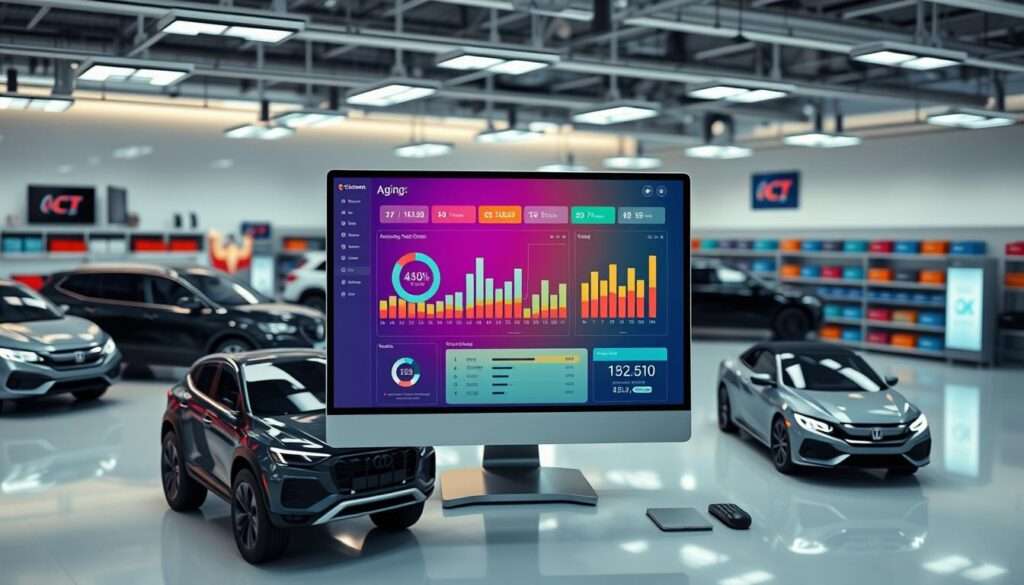
Effective dealership inventory management is vital for maintaining profitability. It helps avoid costs linked to aging inventory. Used cars lose about 1% of their value monthly if unsold, according to a 2023 NADA study.
This highlights the need to manage aging inventory proactively. It’s crucial to minimize financial losses and optimize vehicle stock tracking.
Advanced dealer inventory control systems help segment inventory by age and model. This allows dealerships to prioritize aging inventory and identify underperforming models. Continuous monitoring and adjusting tactics based on market conditions is essential.
Identifying Slow-Moving Vehicles
To manage aging inventory, dealerships must first identify slow-moving vehicles. Aged inventory typically refers to vehicles on the lot for 60-90 days or more. Inventory management software can track how long each vehicle has been in stock.
Analyzing sales data helps spot trends and underperforming models. Seasonal variations also affect aged inventory. Staying informed about slow-moving vehicles helps create new training opportunities for staff.
Implementing Targeted Sales and Marketing Strategies
After identifying slow-movers, dealerships can use targeted strategies to sell aging inventory quickly. Dynamic pricing, adjusted for demand and market trends, can boost sales. Offering discounts, incentives, or special financing can attract customers to aging inventory.
Effective marketing campaigns highlighting the value of aging inventory can stimulate demand. VIN-specific advertising and online marketplaces can open new sales avenues. Social media platforms are powerful tools for marketing and selling aged inventory.
“By proactively managing aging inventory through targeted sales and marketing strategies, dealerships can minimize financial losses and optimize their vehicle stock tracking.” – Willowood Ventures
Regular rotation, seasonal events, and trade-in incentives can help manage aging inventory effectively. Extended warranties, free servicing, or upgrades can make aged inventory more attractive. Continuous monitoring of these strategies helps dealerships navigate aging inventory challenges successfully.
Developing a Comprehensive Sourcing Strategy
A solid sourcing strategy is key for effective automotive inventory software management. It helps optimize your dealership’s inventory and boost profits. Define acquisition frequency, sources, and trade-in parameters to achieve this goal.
Defining Acquisition Frequency and Sources
Use your car lot management system to analyze market demand. Set realistic targets for inventory replenishment. Consider various sourcing channels to maintain a balanced inventory.
These channels may include trade-ins, auctions, wholesale channels, and private sellers. Diversifying sources ensures steady inventory flow and reduces supply chain risks.
- Trade-ins from existing customers
- Automotive auctions, both physical and online
- Wholesale channels and dealer networks
- Private sellers and consignment deals
Auto auctions like ACV Auctions often offer vehicles at lower costs. They serve over 16,000 dealerships across the United States.
Establishing Trade-In Decision Parameters
Use data-driven approaches for trade-in valuations. Market insights and vehicle inventory optimization tools help determine true vehicle worth. Offer fair trade-in values to boost customer satisfaction and loyalty.
Dealerslink’s Trade Devaluation tool uses market data for accurate trade-in offers. This creates a win-win situation for both dealerships and customers.
Integrating Digital Marketing Initiatives
Align your sourcing strategy with targeted digital marketing. This helps attract the right inventory and customers. Implement strategies to communicate your inventory needs effectively.
- Targeted email campaigns promoting trade-in offers
- Social media advertising highlighting in-demand vehicles
- Search engine optimization (SEO) to improve visibility for specific vehicle models
- Retargeting campaigns to re-engage potential trade-in customers
Digital marketing efforts can attract desired vehicles to your dealership. They help communicate your inventory needs effectively.
Willowood Ventures, a leading automotive marketing agency, specializes in innovative digital strategies for car dealerships. Their proven methods drive high-quality leads, increase appointments, and boost sales, helping dealerships thrive in the digital age.
A comprehensive sourcing strategy is vital for optimizing dealership inventory management. It should cover acquisition frequency, sourcing channels, and trade-in parameters. Use data, market insights, and targeted marketing to ensure high-quality vehicle flow.
Harnessing the Power of Inventory Management Platforms

Modern dealership inventory management platforms are crucial for dealerships to stay competitive. These solutions offer features that boost efficiency and performance. They optimize stock monitoring, enhance forecasting, and streamline inventory management.
Automotive inventory systems increase sales potential with real-time updates. They improve accuracy in managing inventory availability, pricing, and vehicle specs. Centralized tracking saves time and enhances efficiency by storing all data in one system.
These platforms boost marketing and sales with professional vehicle listings and ads. They publish inventory to various online platforms, reaching a wider audience. Sales analytics help dealerships identify trends and make data-driven decisions.
Automation of Workflows
Modern platforms automate workflows, saving time and reducing errors. They streamline processes and minimize manual input. Automated marketing generates attractive listings and detailed descriptions across various platforms.
Inventory organization features improve efficiency by categorizing vehicles based on make, model, and year. Dealerships using inventory management software report a 35% increase in operational efficiency.
AI-Powered Insights and Decision-Making
Advanced platforms integrate AI and machine learning capabilities. They offer VIN-level analytics and market advantages. Lotlinx Sentinel uses 163 data variables to align inventory with market demand.
AI software can lead to a 70% sell rate on targeted vehicles. It eliminates manual data entry errors, improving VIN classification accuracy. Sales analytics help track performance and generate reports on key metrics.
Dealerships using advanced software see a 10% boost in sales performance. These systems provide data on competitor pricing and market demand. This helps dealers set competitive prices and adjust inventory mix. Dealership inventory management drives efficiency in dealers.
“Efficient inventory management systems can contribute to a 15% increase in customer satisfaction levels according to data from the automotive industry.”
Real-time tracking software reduces stock-keeping errors by 18% in dealerships. Technology-driven solutions improve inventory turnover rates by 20%. On average, dealerships see a 30% increase in efficiency with inventory management software.
Embrace modern platforms to transform your dealership’s efficiency and enhance stock monitoring. Improve forecasting and optimize your inventory management. Stay ahead of the competition and drive success in the digital age.
Transform Your Dealership’s Performance with Strategic Inventory Management
In today’s competitive automotive marketplace, dealership inventory management isn’t just important—it’s essential for survival and growth. The dealerships consistently outperforming the competition are those leveraging data-driven inventory strategies to make smarter stocking decisions, optimize pricing, and accelerate turn rates while maintaining healthy profit margins.
By implementing sophisticated vehicle stock tracking and dealer inventory control processes, you can transform your operational efficiency, reduce carrying costs, and significantly improve your bottom line. The most successful dealers understand that effective car lot management goes beyond basic stock control—it requires a comprehensive approach that integrates acquisition, pricing, marketing, and sales into a cohesive strategy.
Advanced automotive inventory forecasting eliminates the guesswork from stocking decisions, ensuring you maintain optimal inventory levels without the financial drain of overstocks or the missed opportunities from stockouts. When combined with transparent pricing strategies that build customer trust, these practices create a foundation for sustainable dealership growth in any market condition.
The results speak for themselves:
- 30-40% reduction in average days to sell
- 15-25% decrease in floorplan financing costs
- Improved gross profit retention on aged units
- Enhanced customer satisfaction through better inventory selection
- More efficient marketing spend with targeted, inventory-specific campaigns
- Streamlined operations across departments
The Willowood Ventures Difference
At Willowood Ventures, we specialize in revolutionizing dealership performance through our comprehensive approach to inventory optimization and digital marketing. Our team of automotive retail experts delivers customized solutions that address your specific inventory challenges while creating targeted marketing campaigns that connect your ideal inventory mix with motivated buyers.
Our integrated solutions include:
- Data-driven inventory analysis to identify your most profitable stocking opportunities
- High-impact Facebook Sales Events designed to move specific inventory
- Targeted email campaigns that match your inventory to interested prospects
- Professional BDC solutions that convert inquiries into showroom appointments
- Inventory-specific digital marketing strategies with measurable ROI
Unlike generic marketing agencies, we understand the unique challenges of automotive retail. Our solutions are designed specifically to help dealers optimize their inventory mix, improve turn rates, and maximize profitability in today’s challenging market conditions.
Ready to Transform Your Inventory Performance?
Discover how Willowood Ventures can help you implement strategic inventory management solutions that drive real results for your dealership. Our automotive experts are ready to analyze your current inventory situation and develop a customized strategy to enhance your profitability.
Schedule Your Complimentary Inventory Analysis
Take the first step toward inventory optimization with a free, no-obligation consultation. Our team will review your current inventory metrics and identify specific opportunities to improve performance.
The automotive retail landscape continues to evolve, but one thing remains constant: dealerships with strategic inventory management systems consistently outperform those operating on intuition alone. Partner with Willowood Ventures today and turn your inventory challenges into competitive advantages.
https://youtu.be/eeLSmfk1NIE
Dealership Inventory Management FAQ: Complete Guide to Optimizing Vehicle Stock
Learn everything you need to know about dealership inventory management and how data-driven strategies can transform your vehicle stocking, pricing, and sales processes.
Dealership inventory management is the systematic process of tracking, analyzing, and optimizing vehicle stock to maximize sales and profitability. It helps businesses navigate the highly competitive automotive landscape by enabling data-driven decisions about which vehicles to stock, when to reorder, how to price them, and when to liquidate aging inventory.
This practice is essential for reducing costs, minimizing waste, and adapting to the ever-changing automotive market conditions. With effective inventory management, dealerships can maintain the right balance of vehicles to meet customer demand without tying up excessive capital in slow-moving stock.
Data-driven inventory management utilizes comprehensive sales history, market trends, and performance analytics to identify vehicles with the highest turnover rates and profit margins. This approach allows dealerships to:
- Recognize patterns in consumer preferences and buying behavior
- Predict bestselling models, trims, colors, and feature combinations
- Maintain optimal stock levels of high-demand vehicles
- Reduce investments in slow-moving inventory
- Allocate marketing resources to maximize sales opportunities
- Make acquisition decisions based on actual performance data rather than assumptions
By leveraging data analytics, dealerships can move beyond gut feelings and create a strategic inventory management approach that consistently stocks what sells in their specific market.
Effective inventory management provides numerous advantages for dealerships:
- Real-time inventory tracking and visibility across all departments
- Improved customer experiences through accurate vehicle information
- Enhanced operational efficiency with streamlined processes
- Optimized demand planning and forecasting capabilities
- Reduced overhead costs from carrying excess inventory
- Decreased interest expenses on floorplan financing
- Better cash flow management through faster inventory turns
- Targeted advertising opportunities based on inventory needs
- Improved gross profit through strategic pricing
- Enhanced team collaboration with shared inventory insights
These benefits combine to create a more profitable and sustainable dealership operation that can quickly adapt to changing market conditions.
Data accuracy is the foundation of effective dealership inventory management. To ensure reliable decision-making, dealerships should:
- Maintain up-to-date information on vehicles, pricing, and sales trends
- Implement regular data audits and clean-up procedures
- Establish standardized data entry processes across departments
- Train staff on proper data management protocols
- Utilize inventory management software with data validation features
- Integrate systems to eliminate duplicate entries and information silos
- Assign clear responsibility for data quality to specific team members
- Conduct periodic reviews of data completeness and accuracy
When dealerships prioritize data quality, they can trust the insights generated by their inventory management systems and make confident decisions about stocking, pricing, and marketing strategies.
Transparent pricing is a critical component of modern dealership inventory management that builds trust with today’s well-informed customers. It provides several advantages:
- Increases customer acquisition by reducing friction in the buying process
- Generates more revenue through improved closing rates
- Aligns prices with actual market demand rather than arbitrary markups
- Reduces time spent on negotiation, improving sales efficiency
- Meets modern consumer expectations for honesty and straightforwardness
- Creates a positive dealership reputation that drives referrals
- Supports online sales processes where transparency is essential
Implementing transparent pricing as part of your inventory management strategy acknowledges that customers today have access to extensive vehicle information before visiting your dealership. It turns this consumer knowledge into an advantage rather than an obstacle.
Understanding consumer behavior and market demand is essential for optimizing dealership inventory management. Dealerships can gain these insights through:
- Third-party data sources like consumer surveys and market research firms
- Internal data analysis at the VIN level to understand buying patterns
- Competitor monitoring to track pricing and inventory strategies
- Website analytics to see which vehicles generate the most interest
- CRM data mining to identify patterns in customer preferences
- Inventory management platforms with integrated market data
- Customer feedback systems to capture direct input on inventory preferences
- Sales team debriefs to understand front-line customer interactions
By combining these sources of information, dealerships can develop a comprehensive understanding of what drives purchasing decisions in their market and adjust their inventory management strategies accordingly.
Proactive management of aging inventory is a critical aspect of successful dealership inventory management. Effective strategies include:
- Early identification of slow-moving vehicles through aging reports
- Addressing obvious issues affecting saleability (poor photos, incomplete information)
- Implementing progressive pricing strategies before vehicles become severely aged
- Using VIN-specific advertising to target likely buyers for specific units
- Contacting previous prospects who showed interest in similar vehicles
- Reviewing reconditioning standards to ensure vehicles present well
- Creating staff incentives for selling aged units
- Moving units between stores in dealer groups to find the right market
- Analyzing why vehicles aren’t selling to prevent similar situations
The goal of these strategies is to minimize the financial impact of aging inventory while maintaining the dealership’s reputation for quality vehicles and fair pricing.
A comprehensive sourcing strategy is fundamental to effective dealership inventory management and should include:
- Well-defined acquisition frequency and volume based on turnover rates
- Diversified sourcing channels (auctions, trade-ins, off-lease, private purchases)
- Data-driven trade-in appraisal processes to capture retail-ready units
- Systematic market analysis to identify high-demand vehicles
- Established quality standards and reconditioning guidelines
- Strong relationships with reliable suppliers and wholesalers
- Regular evaluation of acquisition costs against profit potential
- Clear acquisition parameters based on dealership inventory needs
When dealerships approach sourcing strategically rather than opportunistically, they can build an inventory mix that matches their market’s demand while maintaining healthy gross profits.
Advanced inventory management platforms with automation and AI capabilities can transform dealership operations by:
- Streamlining inventory processes and reducing manual data entry
- Providing VIN-level analytics for precise stocking decisions
- Offering predictive insights on market trends and consumer preferences
- Automating pricing adjustments based on market conditions
- Generating comprehensive performance reports for management review
- Optimizing cross-platform listing management for maximum exposure
- Facilitating inventory collaboration across dealership departments
- Integrating with other dealership systems for a unified approach
These powerful tools help dealerships improve inventory turnover, increase gross profit, and gain a competitive advantage in their markets through data-driven decision-making and operational efficiency.
Dealership inventory management directly impacts profitability through multiple channels:
- Reduced floorplan costs through improved inventory turnover
- Minimized price reductions on aged inventory
- Optimized acquisition costs based on market data
- Improved sales team efficiency with the right product mix
- Maximized gross profit per vehicle through strategic pricing
- Balanced inventory levels that match market demand
- Reduced marketing waste on promoting slow-moving units
- Better cash flow management through faster turns
- Additional F&I opportunities through appropriate vehicle selection
When dealerships optimize their inventory management processes, they can significantly improve their financial performance while building a sustainable business model.
To effectively evaluate inventory management performance, dealerships should track these key metrics:
- Average days in inventory (overall and by vehicle category)
- Inventory turn rate (number of times inventory is sold and replaced annually)
- Cost to market ratio (acquisition cost relative to market value)
- Price to market position (pricing relative to similar vehicles)
- Return on investment by vehicle category and source
- Gross profit per unit